
Materials - Why Fewer Materials Often Create a Richer Interior
Materials are often where attention first settles in a kitchen. Stone, timber, metal and paint are usually considered individually, each chosen for its own character. Yet the experience of a room is rarely defined by any single surface. It is shaped by how those surfaces relate to one another, and how easily the eye moves across them.
For this reason, interiors with many finishes can feel detailed at first yet unsettled over time. Each material asks to be read separately, and the room becomes a collection of decisions rather than a single composition. Reducing the palette does not make a space simpler; it allows it to feel resolved. Instead of noticing differences, you begin to notice continuity, and the atmosphere becomes calmer as a result.
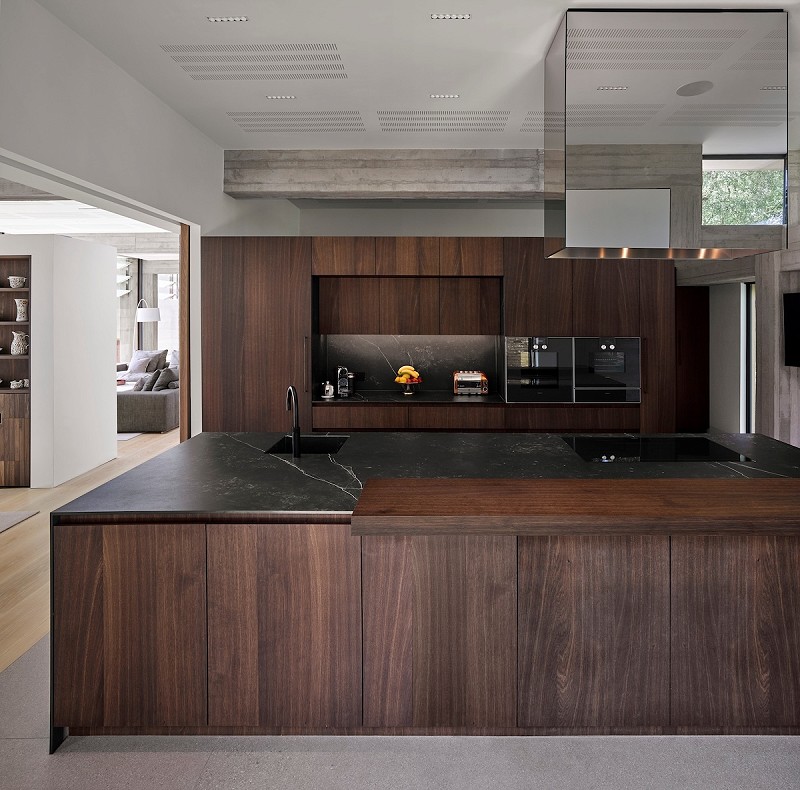
Depth Rather Than Variety
Interest in an interior does not come from constant change, but from subtle variation. A single timber surface reveals different tones in shifting light, natural stone shows movement within its pattern and metal introduces contrast through texture rather than colour. These qualities are only appreciated when they are not competing for attention.
When fewer materials are used, the eye lingers longer. Grain direction, shadow lines and junctions begin to define the character of the room, creating richness through depth rather than contrast. The space feels quieter initially, yet more engaging the longer you spend in it.
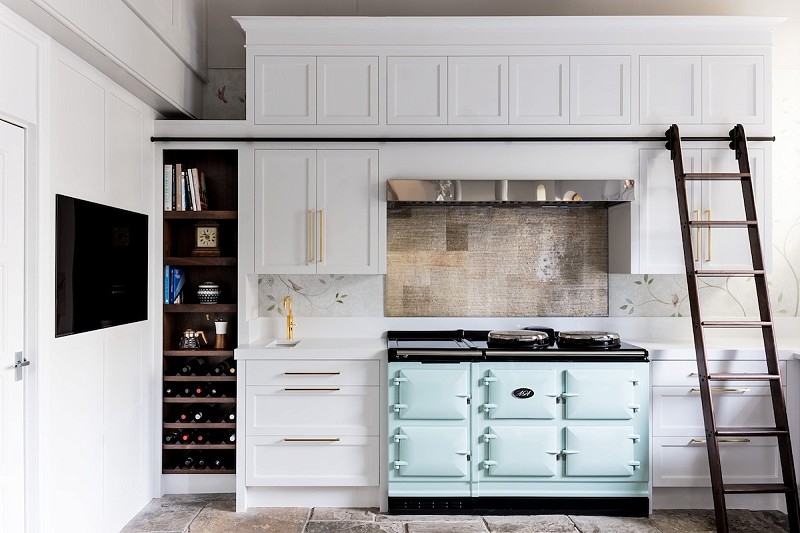
When Materials Become Architecture
Materials can either feel applied to a room or integral to it. When finishes change frequently - from cabinetry to island to wall - each element reads as a separate object. The layout becomes obvious, and the room feels arranged rather than formed.
Allowing materials to continue across surfaces changes this perception. An island feels grounded, cabinetry feels integrated and the architecture becomes clearer. The kitchen reads as part of the home rather than a collection of fitted components.
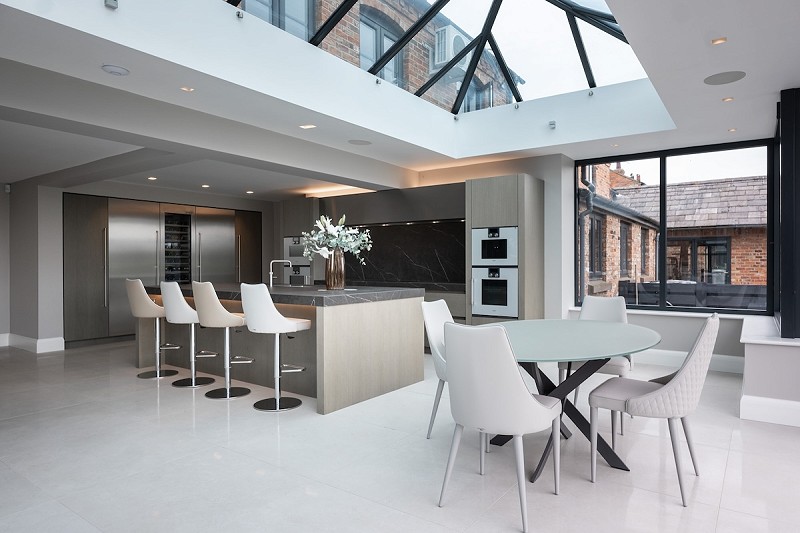
Cohesion Over Contrast
Restraint does not remove contrast; it relocates it. Instead of colour changes, definition comes from proportion, edge detail and the way surfaces meet. A shadow gap, a fine junction or a shift in texture provides interest without interrupting the whole.
Because the palette is controlled, these quieter details carry more weight. The room remains calm, yet never flat.
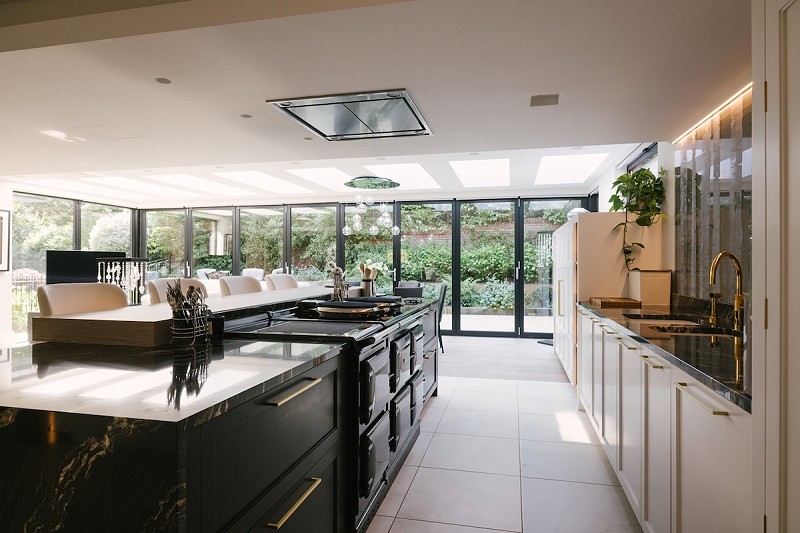
Closing Thoughts
The richest interiors are rarely the most varied. They are the most resolved - spaces where materials work together rather than compete. By limiting the palette, each surface can be experienced fully and the room gains presence without needing emphasis.
At David Lisle, material selection is considered as a relationship across the entire space. When this balance is achieved, the interior does not rely on features for interest; its character comes from coherence and from the way every element supports the whole.

