
Integrated Living: Designing Kitchens that Blur the Lines Between Rooms
Integrated living is more than an open-plan layout - it’s the art of creating seamless flow between spaces that traditionally had clear divides. Kitchens that merge into dining, living or garden areas aren’t just spatially efficient; they’re a response to how people actually live. The goal isn’t openness for openness’s sake, but continuity. A kitchen that doesn’t just stop but evolves into the next space with a deliberate and sophisticated sense of connection.

Continuity by Design
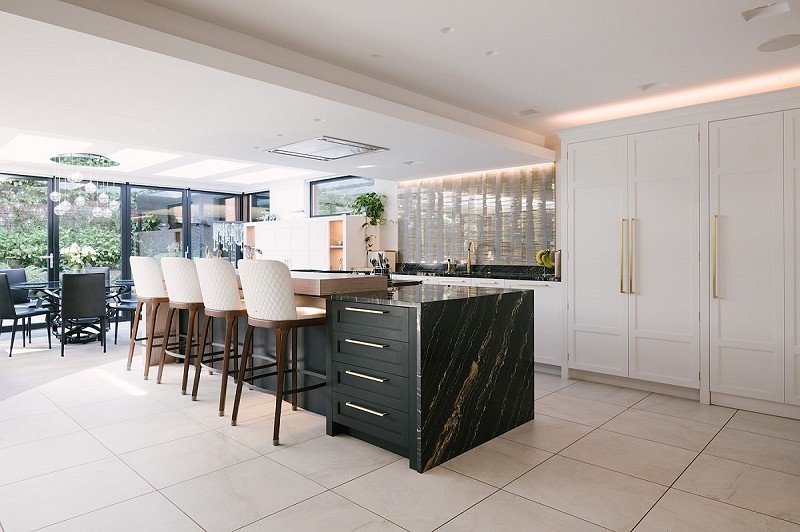
Design cohesion starts with consistency. Flooring is one of the most powerful tools for visual flow - using the same surface material across zones can quickly link them together. But it doesn’t stop there. Aligning ceiling heights, using complementary paint tones and selecting materials with shared undertones (wood grains, stone textures, soft materials) ensures that each zone feels like part of a larger story, not a standalone scene.
Defining Spaces Without Dividing Them
Integrated doesn’t mean indistinct. Zoning is essential - and when done well, it’s subtle. A kitchen island becomes a natural boundary without acting like a wall. Changes in lighting are also effective without disrupting. Pendant lights can define a dining area, while under-cabinet LEDs signal function in the kitchen. Shifts in cabinetry finishes or a wraparound banquette that turns a corner into an informal dining spot, create transitions that are felt more than seen.

Sightlines, Structure and the Role of Architecture
To blur lines between rooms, you have to control how the eye travels. That’s where architectural detailing comes in. Glazed sliding doors that open onto gardens, clerestory windows or internal pocket doors allow a space to expand or contract depending on mood and need. Thoughtful alignment of focal points - a fireplace, a table, a key piece of cabinetry - draws people through a space naturally. It’s not about removing boundaries but rethinking them.

Designing for How You Actually Live
Lifestyle informs layout. If you cook while entertaining, an island facing the living area makes sense. If young children need supervision while you prep dinner, open sightlines to a play area or garden matter more. Every integrated kitchen should be designed around the habits of the people who use it. That might mean built-in storage that runs from kitchen to dining or sliding panels that conceal mess when formality is needed.
The Importance of Bespoke in Integrated Spaces
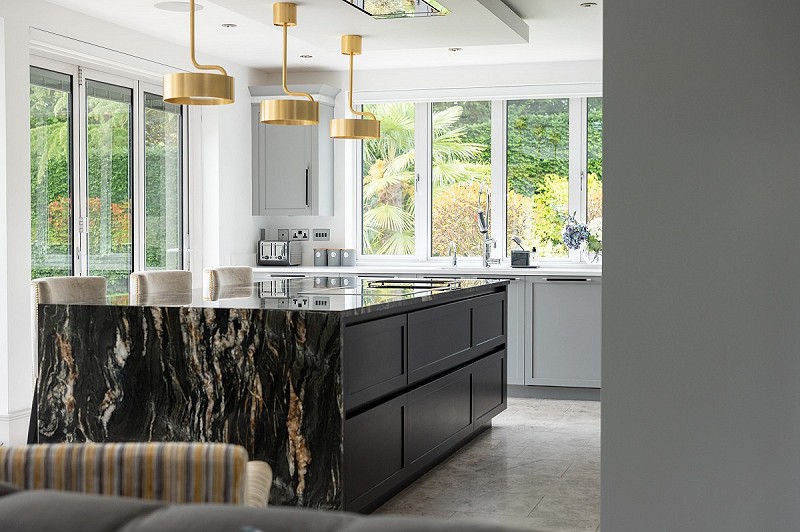
Off-the-shelf solutions often come up short in these environments. In a truly integrated space, standard proportions and finishes rarely fit perfectly. Bespoke design allows cabinetry to match built-in shelving in the living area or kitchen storage to be disguised as part of a wall of joinery. It means every surface, every junction, is considered - not just for function but for how it contributes to a calm, cohesive whole.

Closing Thoughts
Integrated living is not about making everything open - it’s about making everything work together. Without restraint, open-plan spaces can feel noisy, disjointed or overexposed. The solution lies in rhythm: recurring textures, a restrained colour palette and clever use of concealment where needed. It’s a balance of visibility and discretion - a space that performs without shouting.
If you’re considering a kitchen that will add beauty, warmth and connection to your home, we would be delighted to help bring your vision to life. Get in touch with us.

